Hangzhou Juntai Plastic Products Co.,Ltd

Advantages of MBBR in municipal wastewater treatment
(1). Small footprint: Under the condition of 15% packing rate and the same pollution load, the moving bed biofilm reactor accounts for about 20-40% of conventional bioreactors (anoxia, anaerobic and aerobic) Chi Rong.
(2). Suitable for the expansion of municipal sewage treatment plants: In view of the fact that most sewage treatment plants have less reserved area, when the actual influent water quality and water volume change, the original design of the tank capacity is guaranteed to meet the original design of water discharge standard.

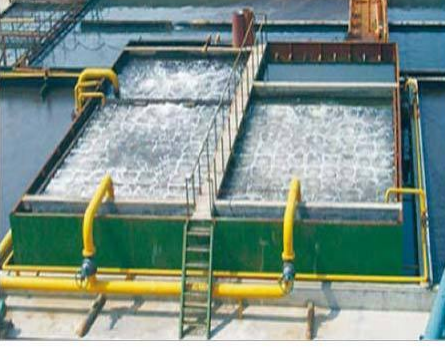
(3). Suitable for the upgrading and transformation of existing sewage treatment plants: The moving bed biofilm process is flexible and simple in design and operation, adapts to different types of ponds, and has strong compatibility with other processes, and can be compatible with large-scale sewage treatment plants that have been built. Some processes such as A2O, AO, SBR, CASS and oxidation ditch method are combined. Therefore, it is suitable for the upgrading and transformation of existing sewage treatment plants to meet the first-level A or first-level B discharge standards.
(4).The moving bed biofilm reactor not only has the characteristics of impact load resistance, long sludge age, less residual sludge, and no sludge expansion in the traditional biofilm method, but also has the high efficiency and operational flexibility of the activated sludge method. On the other hand, the impact of temperature changes on the moving bed biofilm process is much smaller than the effect on the activated sludge process. When temperature, sewage composition changes or sewage toxicity increases, the resistance of the moving bed biofilm reactor is very high. Strong.
(5). A good nutrient, anoxic and anaerobic environment is formed on the packing. Nitrification and denitrification reactions can occur in one reactor, which has a good effect on the removal of ammonia nitrogen.
(6). The sludge concentration in the reactor is relatively high, and the general sludge concentration is 5-10 times that of the ordinary activated sludge method, which can be as high as 30-40g/L. Improve the treatment efficiency of organic matter, and strong impact load resistance